How to Replace a Door Lock: A Complete Step-by-Step Guide by Local Locksmith Experts
Home security starts at the front door. One of the most effective ways to protect your property is understanding how to replace a door lock correctly. As local locksmith professionals, we regularly assist homeowners who want better security—whether after moving into a new home, losing keys, or upgrading outdated hardware.
While many standard door locks can be replaced without professional tools, correct installation is essential. Even small mistakes can compromise safety, cause lock failure, or damage the door itself. This guide explains the full process in detail, highlights common errors we see as locksmiths, and helps you decide when professional assistance is the safer option.
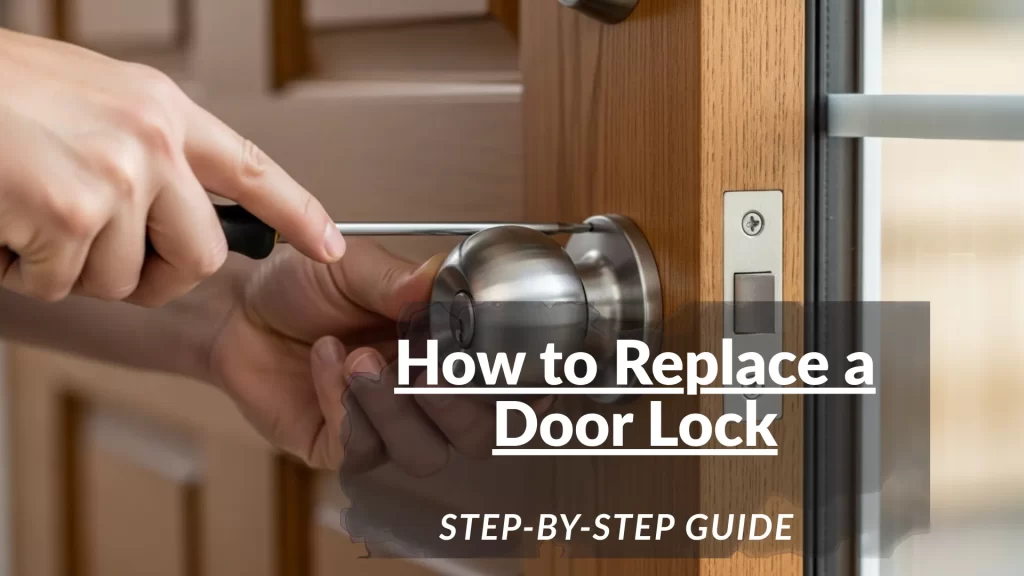
Materials and Tools Needed to Replace a Door Lock
Proper preparation prevents installation issues and wasted time. Most residential locks are designed to be replaced using basic tools.
Tools Required
| Tool | Purpose |
|---|---|
| Phillips screwdriver | Removing and tightening lock screws |
| Flathead screwdriver | Gently prying stuck components |
| Measuring tape | Checking backset and door thickness |
| Flashlight | Viewing latch alignment |
| Small container | Preventing lost screws |
Materials Needed
- New door lock or deadbolt
- Latch assembly (included with most locksets)
- Strike plate and mounting screws
Locksmith Insight:
Before purchasing a lock, confirm whether your door uses a knob lock, deadbolt, or combined lock system. Using the wrong type often leads to misalignment issues.
Step 1: Removing the Existing Door Lock
This first step must be done carefully to avoid door damage.
- Open the door fully for clear access.
- Locate the screws on the interior side of the door.
- Remove the screws using a screwdriver.
- Pull the interior and exterior lock components apart.
- Place all hardware in a safe container.
Avoid force. If the lock resists removal, slight movement usually loosens it.
Step 2: Choosing the Correct Replacement Lock
Selecting the wrong lock is one of the most common homeowner mistakes we encounter.
Key Measurements to Match
- Backset (typically 2⅜″ or 2¾″)
- Door thickness
- Latch faceplate shape (round or square)
- Manufacturer compatibility
Many modern locksets are adjustable, but not all doors are standard.
Professional Tip:
If your door is older, warped, or reinforced, professional fitting may be required to ensure proper security.
Step 3: Removing the Door Latch
Once the lock is removed, the latch remains inside the door.
- Locate the latch on the door’s edge.
- Remove the two screws securing the faceplate.
- Pull the latch straight out.
Inspect the latch opening for wood damage or debris. Clean if needed before installing the new latch.
Step 4: Installing the New Latch
Correct latch orientation is critical for proper lock function.
- Insert the new latch into the door edge.
- Ensure the beveled side faces the door frame.
- Align the faceplate flush with the door edge.
- Secure using the provided screws—tight but not overtightened.
Manually press the latch to confirm smooth movement.
Step 5: Ensuring the Lock Mechanism Operates Smoothly
This step determines whether the installation will succeed long-term.
- Insert the exterior lock component through the latch.
- Align the interior component with the spindle.
- Secure the lock evenly with mounting screws.
- Rotate the knob or turn the key multiple times.
The latch should retract fully and return smoothly without sticking.
Locksmith Warning:
Uneven tightening can cause internal binding, leading to early lock failure.
Step 6: Final Adjustments and Security Testing
Many lock performance issues occur because the latch or deadbolt does not align correctly with the strike plate. If you notice resistance when locking or unlocking the door, it may indicate an alignment problem. Understanding the basics of fixing deadbolt alignment can help ensure smooth operation and prevent unnecessary wear on the lock mechanism.
Close the door and test full functionality.
- Confirm latch alignment with the strike plate
- Ensure the door closes easily without force
- Tighten any loose screws
- Adjust the strike plate if resistance occurs
This final inspection ensures both usability and security.
Frequently Asked Questions (FAQs)
Can I replace a door lock by myself?
Yes, most standard residential locks can be replaced by homeowners with basic tools. However, high-security locks, smart locks, and commercial doors should be handled by a professional locksmith.
What’s the difference between rekeying and replacing a lock?
Rekeying changes the internal pins so old keys no longer work. Replacing a lock installs a completely new locking system.
Do I need special tools to change a door lock?
No. Standard tools like a screwdriver and measuring tape are sufficient for most residential locks.
Should I change my locks after moving into a new home?
Yes. This is strongly recommended. You cannot know how many spare keys exist from previous occupants.
How long does it take to replace a door lock?
A DIY replacement usually takes 20–45 minutes. A professional locksmith typically completes the job in 10–20 minutes.
When Hiring a Local Locksmith Is the Better Choice
DIY replacement may not be ideal if:
- The lock won’t align properly
- The door frame is damaged
- You’re installing smart or high-security locks
- The key doesn’t turn smoothly
- You want guaranteed security installation
Professional locksmiths ensure correct alignment, proper calibration, and long-term reliability—especially for entry doors.
Conclusion
Understanding how to replace a door lock gives homeowners greater control over their home’s security. With careful measurements, correct hardware selection, and proper installation, many standard lock replacements can be completed successfully.
However, when precision, security, or advanced lock systems are involved, a trusted local locksmith in Orlando provides expertise that protects both your door and your peace of mind. Whether you choose DIY or professional service, ensuring your locks are installed correctly is essential for true home security.